
Schema Markup and Structured Data for AI Search Engines
Which schema types matter most for AI engines (Article, FAQ, HowTo, Organization), working JSON-LD examples, validation tools, and the implementation errors we see weekly.
Last updated:

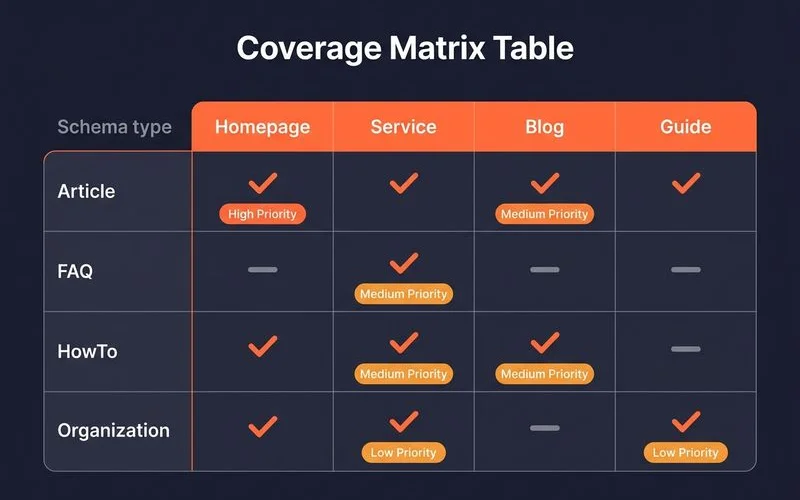
The schemas that matter most for AI search
You know how AI search engines like Perplexity and Google’s AI Overviews seem to understand some websites perfectly? That isn’t magic. It’s structured data, or schema markup, working behind the scenes.
For Malaysian businesses, this is a huge opportunity. While traditional SEO was about ranking pages, AI search is about citing sources. A 2026 analysis found that pages with well-implemented structured data are cited up to 3.2 times more often in AI responses. It’s the clearest way to tell these new engines what your content means and why it’s a trustworthy source.
Here, we’ll cover the essential schema types that give you the biggest advantage in AI search, how to validate your code, and the common mistakes we see that can make your structured data invisible.
Let’s get your content ready for the new era of search.
Article schema
This is for your blog posts, guides, and case studies. Article schema tells AI engines that your page is a piece of editorial content with a specific author, publication date, and topic. This is fundamental for AI systems like Perplexity and ChatGPT, as they rely on it to verify publication dates and authorship when checking facts.
FAQPage schema
This schema type has the single highest impact on AI extractability. Although Google retired the visual “rich result” for FAQs in May 2026, the schema itself is more important than ever. AI engines are fundamentally built to answer questions, and FAQPage schema feeds them your content in a perfect question-and-answer format. One recent study showed pages with FAQPage markup are 3.2 times more likely to appear in Google AI Overviews. If you want to confirm the extraction is actually working, run the diagnostic in our AI visibility audit guide — it shows whether engines are citing the pages you’ve marked up.
HowTo schema
Perfect for any step-by-step procedural content, like recipes or tutorials. Instead of having to parse long paragraphs, HowTo schema lets engines extract numbered steps cleanly. This makes it ideal for voice search queries on devices like Google Assistant and for AI that needs to provide clear, actionable instructions.
Organization schema
This schema defines your brand as an entity. It belongs on your homepage and About Us page and should only be defined once to avoid confusing search engines. It establishes your official business name, logo, social media profiles, and contact details, all of which are critical signals that Large Language Models (LLMs) use to distinguish your brand from others with similar names.
Our AEO/GEO service includes the implementation of all four of these core schema types across your website’s templates, ensuring your content is structured for maximum AI visibility.
Working JSON-LD examples
The minimum viable Article schema for a blog post:
{
  "@context": "https://schema.org",
  "@type": "Article",
  "headline": "How Long Does SEO Take to Show Results in Malaysia?",
  "description": "Realistic SEO timeline with month-by-month milestones.",
  "image": "https://www.adam-seo.com/images/blog/seo-timeline.jpg",
  "author": {
    "@type": "Person",
    "name": "Adam Yong",
    "url": "https://www.adam-seo.com/about/#adam-yong"
  },
  "publisher": {
    "@type": "Organization",
    "name": "Adam SEO",
    "logo": { "@type": "ImageObject", "url": "https://www.adam-seo.com/logo.png" }
  },
  "datePublished": "2026-05-26",
  "dateModified": "2026-05-26"
}
The minimum viable FAQPage schema:
{
  "@context": "https://schema.org",
  "@type": "FAQPage",
  "mainEntity": [
    {
      "@type": "Question",
      "name": "How long does SEO take?",
      "acceptedAnswer": {
        "@type": "Answer",
        "text": "Most engagements show ranking movement by month 3-4 and meaningful revenue impact by month 4-8."
      }
    }
  ]
}
The minimum viable Organization schema:
{
  "@context": "https://schema.org",
  "@type": "ProfessionalService",
  "@id": "https://www.adam-seo.com/#organization",
  "name": "Adam SEO",
  "url": "https://www.adam-seo.com",
  "logo": "https://www.adam-seo.com/logo.png",
  "telephone": "+60 16-699 9393",
  "email": "hello@adam-seo.com",
  "address": {
    "@type": "PostalAddress",
    "streetAddress": "Level 23, Premier Suites, 1 Mont Kiara",
    "addressLocality": "Kuala Lumpur",
    "postalCode": "50480",
    "addressCountry": "MY"
  },
  "areaServed": ["Kuala Lumpur", "Penang", "Johor Bahru"]
}
Validation tools
Using the right tool for the right job is crucial for making sure your schema is error-free before it goes live. Here are the three tools we use every day.
- Google Rich Results Test: This should be your primary check. It tests your code against Google’s specific requirements for rich results and is the most stringent validator for that purpose. A pass here is a strong signal your schema is ready for production.
- Schema.org Validator: This tool validates your code against the full, canonical Schema.org specification. It often catches structural or vocabulary errors that Google’s more focused tool might tolerate, making it an excellent secondary check for comprehensive compliance.
- Browser DevTools: This is the quickest sanity check. After deploying, right-click on your page, select “Inspect,” and search for
application/ld+json. This instantly confirms the JSON-LD script is present and correctly formatted in the rendered HTML.
For more complex needs, tools like TestSprite and the ITS Schema Markup Validator offer AI-powered suggestions and faster error detection.
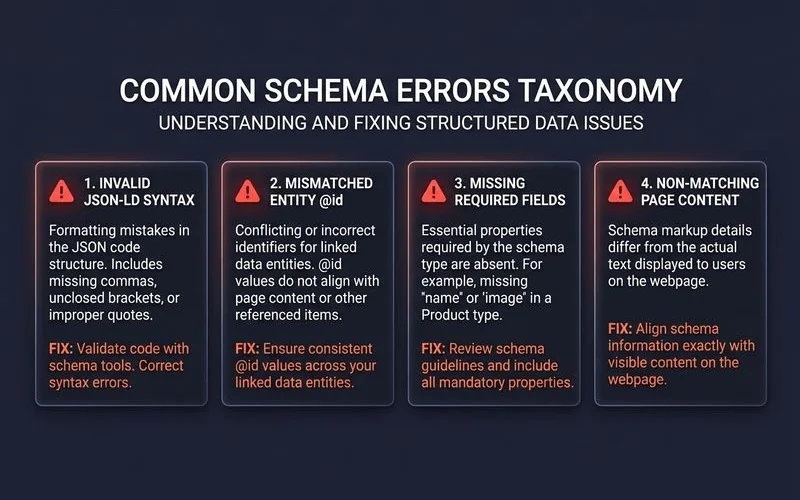
Common implementation errors
We audit websites weekly, and these five errors show up consistently. Avoiding them is key to ensuring your schema markup for AI search actually gets used.
- Invalid JSON syntax: A single misplaced comma or a missing closing bracket can invalidate the entire script. Before using other tools, run your code through a simple validator like JSONLint to catch basic syntax errors.
- Mismatched @id values: The
Articleschema might reference aPersonusing an@idthat doesn’t exist elsewhere, or anOrganization@idis broken. Search engines will silently skip schema with broken entity references. - Required fields missing: An
FAQPagewithout anacceptedAnsweror anArticlemissing adatePublishedwill fail validation. Google’s systems will deprioritise incomplete schema, as it signals low-quality data. - Schema referencing invisible content: Adding five questions to your
FAQPageschema when only three are visible on the page is a common mistake. Google’s quality guidelines are clear, the structured data must match the user-visible content, and a mismatch can cause the schema to be ignored or de-indexed as spam. - Multiple, conflicting Organization schemas: We often see different
Organizationschemas across a site with different phone numbers or addresses. This duplication creates conflicting signals, erodes trust, and prevents AI engines from building a clear, canonical understanding of your brand.
Entity-relationship modelling for stronger LLM citation
Going beyond individual schema types, the real power comes from connecting them. This process, known as entity-relationship modelling, creates a machine-readable graph of your brand.
It’s how you explicitly tell AI systems how different pieces of your business connect.
Use consistent @id URIs. Every core entity should have a single, canonical URI. For example, using https://www.adam-seo.com/#organization consistently as the @id for your company allows you to reference it cleanly from every other piece of schema, building a reliable entity graph for Google.
Link people to organisations and back. An effective brand graph has bidirectional links. Each Person schema should use the worksFor property to point to the Organization’s @id. In return, the Organization schema should use the member property to reference each Person’s @id.
Connect services to the organisation. Your Service schema should always include a provider property that points directly to the Organization’s @id. This removes any ambiguity about which entity is offering the service, a crucial detail for AI-driven local and service-based queries.
We document the full implementation pattern in our broader technical SEO service.
Want a schema audit on your existing site? Request a discovery call with our team.