
Our 4-Stage 9-Step SEO Framework, in Plain English
Inside the Adam SEO methodology: 4 stages (Analysis, CRO, Optimization, Re-Engagement) and the 9 specific steps that turn organic traffic into revenue.
Last updated:
Why we have a framework at all
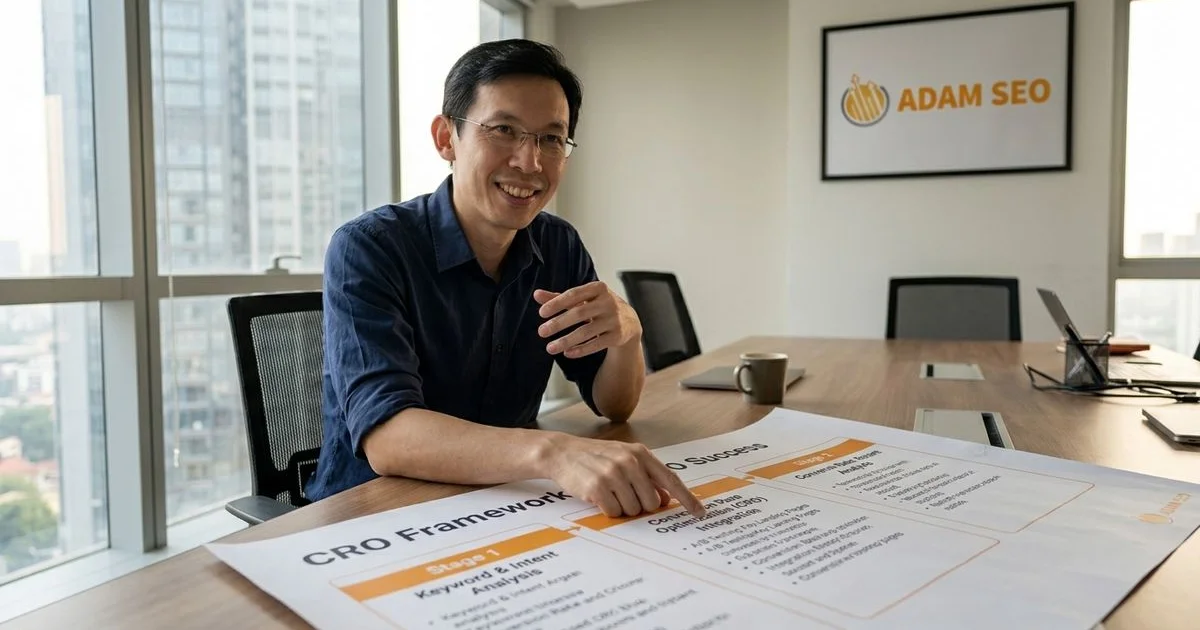
Most SEO retainers fail for the same reason. You see, the work is often sequential when it should be parallel, optional when it should be required, and reported on metrics that don’t matter to the bottom line. We built the 4-Stage 9-Step Framework back in 2018 to fix all three problems at once.
Since then, we’ve shipped this exact methodology across more than 100 engagements with Malaysian businesses.
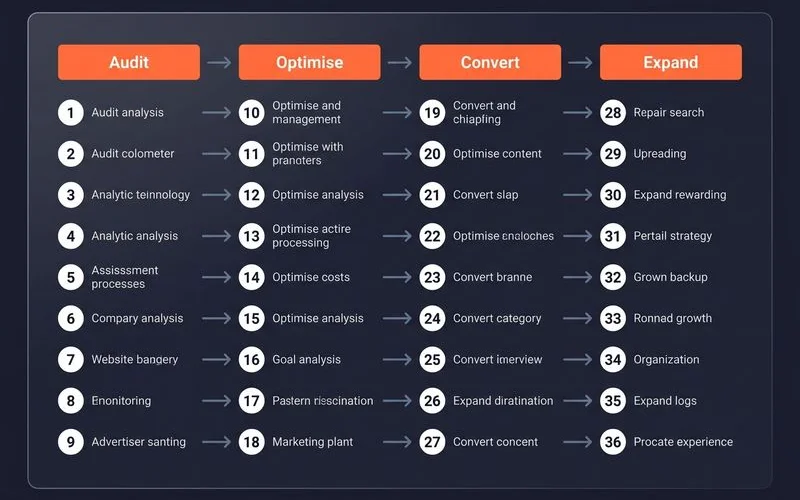
The logic is straightforward. Our SEO framework methodology has four distinct stages because each one solves a different business problem. Skipping any of them is precisely why so many generic retainers underperform. The nine steps exist to give a Malaysian SME’s marketing lead a clear view of progress, month to month.
Stage 1 — Analysis (the foundation everyone else skips)
This first stage produces a fact base. We don’t start optimising pages until we understand exactly what needs fixing, where the opportunities are, and what your competitors are doing right.
Step 1 — Business and product analysis
We apply the 80/20 rule to pinpoint which of your products or services drive the most revenue. The entire SEO budget then concentrates on these core offerings, not on a list of vanity keywords that only look good in a report.
Step 2 — Advanced keyword research
Our team uses tools like Ahrefs and SEMrush to check for search volume and competition. We also mine AI-search queries to add the crucial AEO/GEO (Generative Engine Optimisation) layer. This process maps keywords to commercial intent, focusing on what leads to a sale, not just traffic. It’s vital for Malaysian businesses to target localised keywords like “best shoes in KL” instead of generic terms.
Step 3 — Website, competitor, and technical analysis
We benchmark your website against your top three Malaysian competitors and perform a full technical SEO audit. This audit, often conducted with tools like Screaming Frog, covers everything from crawlability and indexation to Core Web Vitals and schema markup. The output is a clear fix list, prioritised by what will make the biggest impact on your revenue.
If you only ever invest in one stage, make it this one. Most clients uncover critical issues they never knew they had.
Stage 2 — Conversion Rate Optimization (the embedded layer)
Stage 2 runs in parallel with Stage 3, not after it. Skipping this is the single biggest mistake we see in other SEO retainers, and it’s a primary reason they fail to deliver tangible results. Traffic without conversion is just a number.
Step 4 — Website design optimisation
Our focus here is on rewriting high-intent landing pages to be more persuasive. We add trust signals “above the fold” where users will see them immediately. This could include customer testimonials, industry awards, or key certifications. We also install conversion-focused widgets like review pop-ups, click-to-WhatsApp buttons, and sticky call-to-action bars on mobile.
Step 5 — Speed and social proof
Fixing Core Web Vitals is a Stage 2 task because speed affects both search engine rankings and your conversion rate. In fact, a study by Deloitte showed that even a 0.1-second improvement in load speed can boost retail conversion rates by 8.4%. Social proof and testimonial placement are also handled here, as they are operational CRO tasks that directly impact a user’s decision to buy.
Stage 3 — On & Off-Page Optimization (the pillar of growth)
This stage is what most people think of when they hear “SEO”. It’s a continuous process that begins in month one and compounds over the entire retainer period, forming the core of our ROI SEO methodology.
Step 6 — On-page optimisation
We handle all the foundational on-page elements here. This includes writing meta titles and descriptions, structuring header hierarchy, and building a smart internal linking strategy. Content production and schema markup across various page templates are also key activities. For local businesses, implementing LocalBusiness schema is critical to provide search engines with your address, hours, and phone number. We also integrate AEO/GEO content formatting by including definitive answers and FAQ blocks, making your content easier for AI to extract and feature.
Step 7 — Off-page optimisation and link building
This step involves a tailored link acquisition strategy that focuses on earning mentions from respected Malaysian and regional publications. Think editorial mentions in outlets like The Star or Malay Mail, not low-quality links. This brand co-occurrence work builds authority for both traditional search and AEO/GEO citations.
One critical caveat
We do not buy PBN links. Every link is earned through editorial placement or outreach. Google’s March 2024 spam updates specifically penalise schemes that might have worked five years ago, and we will not put a client’s website at risk for a short-term gain.
Stage 4 — Re-Engagement (the compounding layer)
Stage 4 usually begins around the fourth month of an engagement. By this point, the organic traffic volume is typically high enough to justify the investment in re-engagement strategies.
Step 8 — Remarketing
We set up targeted campaigns to bring back visitors who didn’t convert on their first visit. This includes email sequences for abandoned carts, Facebook remarketing campaigns, and Google Ads dynamic remarketing. This strategy can often lift overall conversions by an additional 5-10%.
Step 9 — Monthly reporting and ongoing CRO testing
Every month, we produce a written report that leads with what matters most: revenue. The report details the specific work that was shipped and provides a clear preview of the next month’s priorities. We also run continuous A/B tests on the templates established in Stage 2, always looking for opportunities to improve conversion rates.
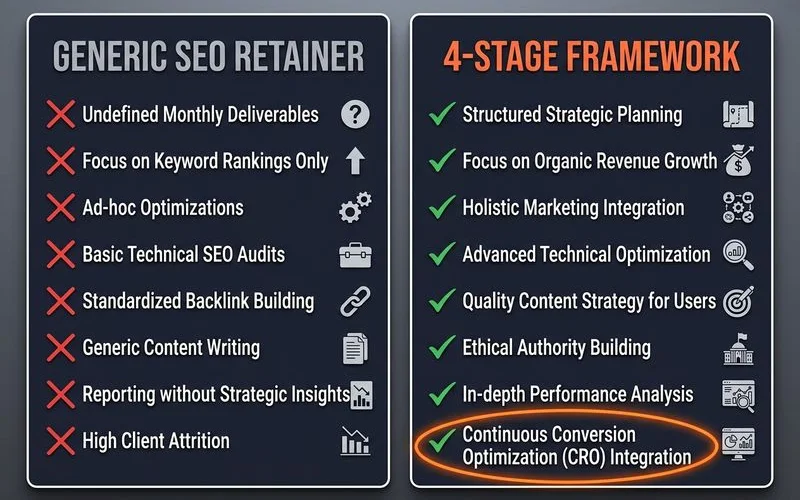
Why this beats a generic retainer
A standard, traffic-only SEO retainer will create content, build some links, and send you a report about your rankings. If you are lucky, your traffic might go up. Whether that traffic actually converts into customers is treated as someone else’s problem.
The Adam SEO Framework is different. Our 9-step SEO process forces conversion rate optimisation into the work plan from the beginning. Every single deliverable is anchored to a measurable business outcome, and the monthly report is clear enough for a CFO to understand.
Across more than 100 engagements, the median client sees the first revenue impact between months 4 and 8. From month 9 onward, the growth typically begins to compound.
Want this methodology applied to your business? — Request a free founder-led discovery call.
Quick Answers
Can I just buy Stage 1 (the audit) on its own?
Why is CRO built into the framework — isn't that a separate discipline?
How long does each stage take?
Related Guides
Common SEO Myths and Misconceptions (Debunked for 2026)
Myth-busting on guaranteed rankings, link buying, keyword stuffing, 'SEO is dead' claims, and AI replacing SEO. What actually moves the needle in 2026.
How Long Does SEO Take to Show Results in Malaysia?
Realistic SEO timeline: technical quick wins in month 1, ranking movement by months 3-4, meaningful revenue impact by months 4-8 for Malaysian businesses.
How to Choose an SEO Agency in Malaysia (2026 Buyer's Guide)
What to look for in a Malaysian SEO agency: red flags, the right questions to ask in discovery, and reporting standards that separate operators from sellers.
SEO ROI — What Should You Realistically Expect?
How SEO ROI is calculated, realistic break-even timelines per retainer tier, and what an Adam SEO 283%-revenue case study actually looked like month-by-month.