
Common SEO Myths and Misconceptions
Myth-busting on guaranteed rankings, link buying, keyword stuffing, 'SEO is dead' claims, and AI replacing SEO. What actually moves the needle in 2026.
Last updated:
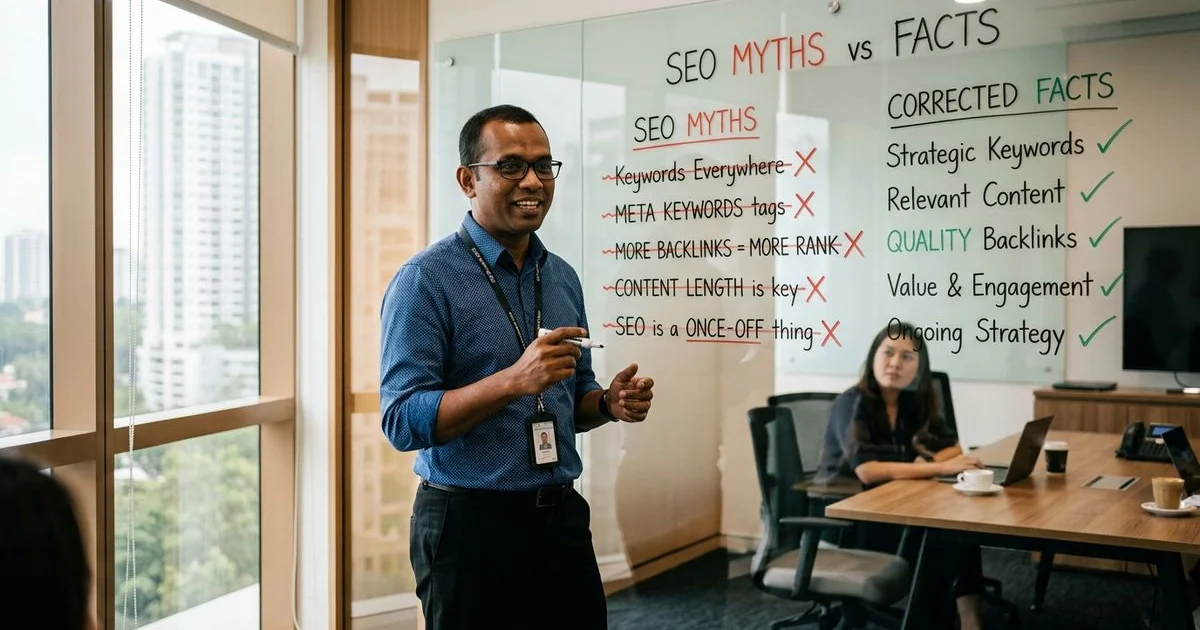
Why myth-busting matters in 2026
You know how it is, you speak to a new client and realise they have been burned by some really bad SEO advice. We see it all the time with the Malaysian businesses we audit. An agency sold them on tactics that were effective years ago but are now useless, or they read a confusing thread online and concluded SEO was a waste of time.
Both conclusions are wrong, and both cost businesses real money in lost opportunities.
The truth is, search is still the starting point for most customer journeys. What has changed is how the results appear and what it takes to earn a top spot.
So, let’s clear up the five biggest SEO myths we still hear on discovery calls and explain what actually works for Malaysian businesses today.
Myth 1: “SEO is dead”
The 2026 version of this myth is that AI search is making traditional rankings irrelevant.
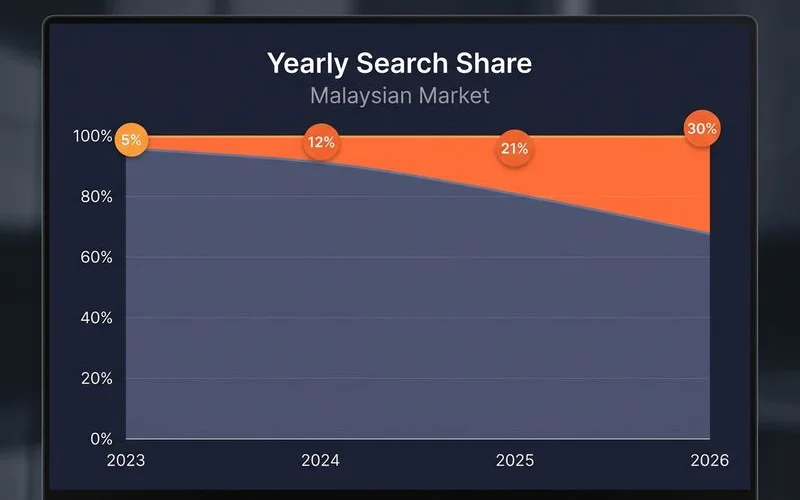
The data tells a very different story. According to StatCounter, Google still commands over 92% of the search engine market share in Malaysia as of April 2026. For mobile searches, that number is even higher, at over 96%. What’s changing is the search results page itself, not Google’s dominance.
With features like AI Overviews, the game has shifted. Some studies have shown that these AI-generated answers can reduce clicks to organic results, with one report from Ahrefs in May 2026 noting a 58% lower click-through rate for top-ranking pages. SEO isn’t dead, it has simply expanded. The challenge now is to be the source for those AI answers while also ranking in the traditional blue links.
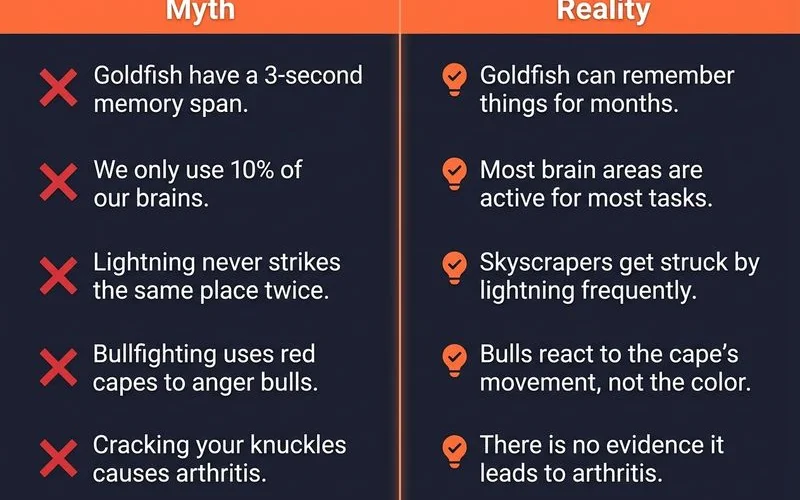
Myth 2: Guaranteed rankings are achievable
Any agency that promises a guaranteed number one ranking is selling a fantasy.
Google’s own guidelines for hiring an SEO professional state very clearly, “No one can guarantee a #1 ranking on Google.” They explicitly warn businesses to be wary of any SEO company that claims to have a “special relationship” with Google or advertises priority submissions.
Search results are dynamic, changing based on user location, search history, and the device they are using. An agency can’t guarantee a specific position because they don’t control the algorithm. What a legitimate agency can guarantee is a sound methodology, transparent reporting, and a commitment to achieving the project’s goals. If you’re vetting agencies, our agency selection guide has the right questions to ask.
Myth 3: Keyword stuffing still works
This idea hasn’t been effective since around 2013, yet some still cling to it.
Google’s algorithms, powered by technologies like BERT and the more powerful Multitask Unified Model (MUM), are now incredibly sophisticated at understanding natural language. These systems focus on the context and intent behind a search query, not just matching keywords. Forcing keywords into your content makes it unreadable for users and signals to Google that your page is low-quality.
What moves rankings in 2026 is topical authority. You build this by creating genuinely helpful content organised in a pillar-and-cluster model, where a main “pillar” page links out to related, in-depth articles. This is the exact strategy behind our 4-Stage Framework.
Myth 4: Buying links is harmless
The Google link spam updates of 2024 made this myth incredibly risky.
Mass-buying links from cheap directories, private blog networks (PBNs), or paid guest post farms is one of the fastest ways to get a penalty. We have audited Malaysian sites that lost 40-60% of their organic traffic almost overnight because a previous agency engaged in these risky tactics.
What does work is earning high-quality editorial links from legitimate, authoritative Malaysian publications. Think of sites like The Star, Malaysiakini, or Free Malaysia Today. A link from one of these sources signals genuine trust and authority to Google. It takes more time and effort, but the results are durable and predictable, unlike the gamble of buying low-quality links.
Myth 5: AI will replace SEO
This is the opposite of the first myth, but it leads to the same incorrect conclusion.
AI tools are not replacing SEO professionals, they are becoming part of the toolkit. Answer Engine Optimisation (AEO) and Generative Engine Optimisation (GEO) are now crucial extensions of the core SEO discipline. Malaysian agencies like Rankpage and Growth Pro are already integrating AI to speed up data analysis, identify keyword opportunities, and automate technical audits.
The same signals that have always been important for SEO, like high-quality content, structured data, and technical excellence, are also the signals that get your content cited in AI Overviews. Brands that invest in both traditional SEO and these new AEO principles are the ones who will dominate search results in the years to come.
What does actually move the needle in 2026
It comes down to five key areas, in rough order of importance.
- A solid technical foundation. This includes getting your Core Web Vitals in order, as they are a confirmed Google ranking factor. A good score can be a tie-breaker between pages with similar content quality.
- Topical authority from a pillar-and-cluster strategy. This demonstrates your expertise and builds trust with search engines.
- High-quality editorial links. These are earned from real publications and provide a durable boost to your site’s authority.
- Structured data for AI readiness. Using Schema markup helps AI engines understand your content, which is crucial for getting cited in AI answers and can improve click-through rates by 20-30%.
- Conversion rate optimisation. Driving traffic is only half the battle. If that traffic doesn’t convert into leads or sales, it’s a wasted investment.
If your current SEO strategy doesn’t cover all five of these points, it might be time to ask why.
Need a second opinion on your site’s performance? You can book a free discovery audit with our team.
Quick Answers
Is it true that ChatGPT will replace Google?
Will Google penalise me for AI-generated content?
Are backlinks still relevant in 2026?
Related Guides
The Adam SEO 4-Stage 9-Step SEO Framework Explained
Inside the Adam SEO methodology: 4 stages (Analysis, CRO, Optimization, Re-Engagement) and the 9 specific steps that turn organic traffic into revenue.
How Long Does SEO Take to Show Results in Malaysia?
Realistic SEO timeline: technical quick wins in month 1, ranking movement by months 3-4, meaningful revenue impact by months 4-8 for Malaysian businesses.
How to Choose an SEO Agency in Malaysia (2026 Buyer's Guide)
What to look for in a Malaysian SEO agency: red flags, the right questions to ask in discovery, and reporting standards that separate operators from sellers.
SEO ROI — What Should You Realistically Expect?
How SEO ROI is calculated, realistic break-even timelines per retainer tier, and what an Adam SEO 283%-revenue case study actually looked like month-by-month.