
What Is GEO — Generative Engine Optimization?
GEO defined: how Generative Engine Optimization differs from AEO, how LLMs choose which brands to cite, and the entity-association strategy that drives results.
Last updated:

The definition
You already know that generative AI is changing how your customers find information. An April 2026 report from Stanford University highlighted that around 80% of Malaysians believe AI will significantly change their lives, and they are already using it at work and at home. This shift is creating a new priority for businesses.
That priority is GEO (Generative Engine Optimization), the discipline of building brand and entity authority so that generative AI engines, like ChatGPT, Gemini, and Perplexity, cite your brand when generating answers in your category.
GEO is the sibling discipline to AEO. Both fall under the AEO/GEO umbrella we offer as a service, but they target different mechanics. AEO focuses on extractive answer engines that pull live citations for things like featured snippets. GEO focuses on generative Large Language Models (LLMs), where citation behaviour depends on the model’s trained knowledge of your brand.
GEO vs AEO — the key distinction
The two disciplines share content formatting and structured data tactics but diverge on emphasis.
AEO is about winning the “quick answer” on traditional search engines. GEO is about becoming a trusted, long-term source for AI.
| Aspect | AEO (Answer Engine Optimization) | GEO (Generative Engine Optimization) |
|---|---|---|
| Primary Target | Extractive engines (Google Snippets, “People Also Ask”) | Generative LLMs (ChatGPT, Gemini, Claude, Perplexity) |
| Core Tactic | Optimise a specific page for clean answer extraction. | Build brand-entity association across the entire web. |
| Key Tools | Schema.org markup, FAQ blocks, definitive Q&A content. | Editorial mentions, podcast appearances, high-authority co-occurrence. |
| Feedback Loop | Fast. Results are often visible in 2-6 weeks. | Slow. Results can take 3-6 months or more to appear. |
For most Malaysian businesses we work with, we run both simultaneously. AEO produces faster, more immediate wins while GEO compounds to build a long-term, defensible position in AI-generated answers.
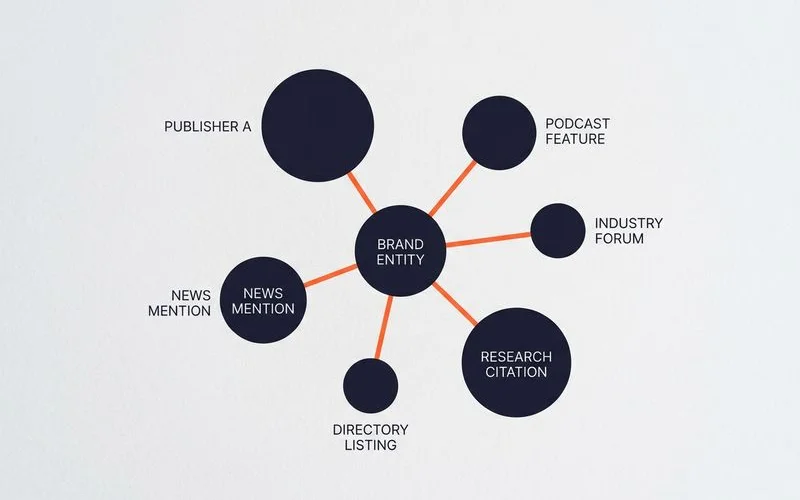
How LLMs choose which brands to cite
Generative AI engines learn about brand authority from their training data. When a user asks a category question, like “Best CRM for SMEs in Malaysia?,” the model’s response is shaped by patterns it learned about which brands co-occur with which categories.
Four signals matter most.
Co-occurrence frequency with the category
How often does your brand name appear alongside your category term across the web? If “Your Brand” + “CRM for SMEs” appears in 50 authoritative sources, that signal is far stronger than if it only appears in five. The model operates on probability, and high frequency makes your brand a statistically likely answer.
Co-occurrence quality (publisher authority)
Mentions on tier-1 publications weigh more than mentions on low-authority blogs. The model has an internal understanding of which publishers carry more weight. For a Malaysian business, this means earning mentions in respected local and regional media is critical.
- Top-tier national news: The Edge Malaysia, Malay Mail, BusinessToday.
- Regional tech and business press: Digital News Asia, Tech in Asia, Vulcan Post.
- Specialist industry publications: Publications like Malaysian Business or focused trade journals.
Entity disambiguation clarity
When a brand name is generic or overlaps with other entities, the model needs clear signals to know which one the user means. You can provide these signals through technical means. A complete Schema.org Organization markup, a well-maintained Wikipedia or Wikidata entry, and a consistent Google Business Profile all help an AI confidently identify your business.
Recency and freshness of signals
Older training data generally weighs less than newer co-occurrence patterns. Brands that are actively building their entity-association and earning mentions in 2026 will have a distinct advantage in shaping the responses of the 2026-2027 model generations.
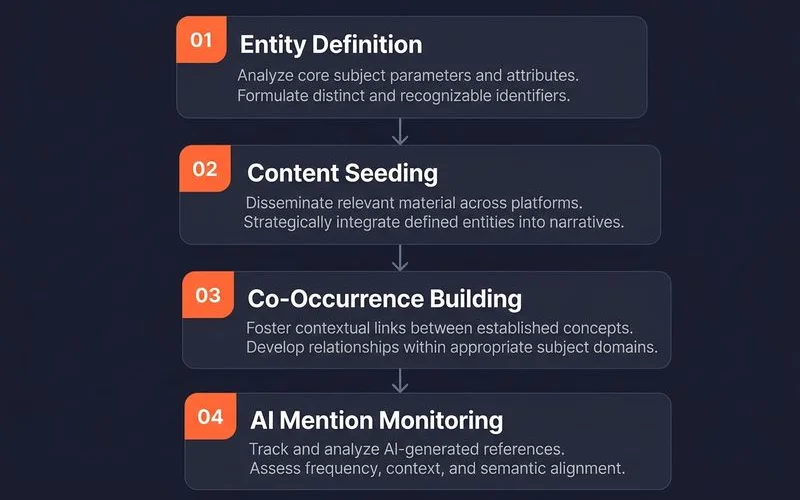
Practical first-quarter GEO checklist
For businesses ready to invest in their AI visibility, these are the four priorities for the first quarter.
- Define the brand entity. Ensure your
Schema.orgOrganization markup is correctly implemented on your homepage and About page. You can use tools like Google’s Rich Results Test to validate it. A complete LinkedIn company profile and a consistent description across all platforms also strengthen this signal. - Seed authoritative co-occurrence. Aim for 4-6 editorial placements per quarter. Focus on tier-1 Malaysian publications, respected industry journals, and high-authority sites in adjacent categories.
- Secure podcast and panel appearances. Having founders or key team members appear on 2-4 relevant podcasts per quarter is a powerful way to build authority. The Malaysian podcast scene has grown significantly, with shows like those produced by BFM attracting large, engaged audiences. These long-form conversations create strong category-authority links.
- Monitor citation behaviour. Run the same 10-15 branded and category queries across ChatGPT, Gemini, and Claude on a quarterly basis. Document any changes in citations. Our AI-visibility audit guide provides a detailed methodology for this process.
What GEO doesn’t do
It’s equally important to understand the limitations of Generative Engine Optimization.
It doesn’t replace traditional SEO
Google still handles over 96% of the search market share in Malaysia, so GEO investment does not substitute for strong blue-link rankings. A 2026 study from Vodus Research found that even when using AI for search, 78% of Malaysians still use Google as part of their verification process. GEO complements SEO, it doesn’t replace it.
It doesn’t produce fast results
Getting a brand meaningfully cited in major LLMs like ChatGPT or Gemini takes a minimum of 3-6 months of consistent effort. Founders who need a visibility lift in the next 30 days should focus their resources on AEO first.
It doesn’t reward link buying
The training data used by large language models is heavily filtered to remove low-quality content. Paid placements on weak, spammy publishers won’t move the needle and could even carry a penalty risk. The key is to secure earned editorial coverage, which compounds in value over time.
How we integrate GEO into Premium and Elite tier retainers
Our Premium and Elite clients get GEO integrated directly into Stage 3 of our 4-Stage Framework.
This means we provide:
- A quarterly AI-visibility audit across major platforms like ChatGPT, Gemini, Perplexity, and Claude.
- Complete brand entity setup, including
Schema.orgOrganization markup and other ancillary signals. - A dedicated editorial outreach pipeline that targets tier-1 Malaysian and regional publishers.
- Coordination for podcast and authority-placement opportunities for founders and key executives.
- Monthly reporting that tracks citation behaviour alongside traditional metrics like rankings and traffic.
Want to know where your brand currently stands in generative AI? We can help you get a clear baseline. Book a free discovery call to discuss an initial audit.
Quick Answers
Is GEO just SEO with extra steps?
Will GEO replace SEO?
How long until GEO investment shows measurable citation lift?
Related Guides
AI Search vs Traditional Google Search — What's Changing in 2026
Zero-click trends, the share of search shifting to AI engines, what stays the same (intent matching), what changes (citation > ranking), and how to split your budget.
Is Your Brand Visible to AI? How to Audit AI Visibility
DIY AI-visibility self-audit checklist: search your brand in ChatGPT/Gemini/Perplexity, what good vs bad looks like, and what to do when you're not being cited.
How to Get Cited in ChatGPT, Gemini and Google AI Overviews
Practical playbook: structured-data signals, brand co-occurrence patterns, content formats LLMs prefer, and how to audit your existing AI citations today.
Schema Markup and Structured Data for AI Search Engines
Which schema types matter most for AI engines (Article, FAQ, HowTo, Organization), working JSON-LD examples, validation tools, and the implementation errors we see weekly.
Ready for the service?
Learn more about AEO & GEO — AI Search Optimization
Audit and improve your brand's visibility inside ChatGPT, Gemini, Perplexity, and Google AI Overviews — the new front door of organic search.
Explore the AEO / GEO Service